What Is Buzz?
Buzz is a new open-source workspace from Block, Jack Dorsey’s company. It is designed to put people and AI agents in the same project rooms.
Think of it less like a new chatbot and more like a shared workroom. A person can ask a question, an agent can look through past work, prepare an answer, and leave a clear record for the team to review.
Buzz is still early and is mainly built for technical teams. But the bigger idea matters for coaches, consultants, and creators right now: AI becomes more useful when it has a clear role, a shared place to work, and a human who approves important decisions.
Why This Matters For Your Business
Most people use AI one conversation at a time. They open ChatGPT, ask for a post, copy the answer, then start from scratch tomorrow. That can help, but it does not build momentum.
An AI agent team works differently. Each agent has a job. One may turn voice notes into content. Another may prepare client follow-up. A third may check your calendar and draft the next steps. They can all work from the same business context instead of guessing every time.
The Plain-English Lesson From Buzz
- Give each agent one clear job. Start with one business outcome, such as turning a weekly video into social content.
- Give it the right information. Share your offers, past examples, client rules, and brand voice.
- Keep the work visible. Let the agent show what it did, what it used, and what needs your approval.
- Keep a human in charge. You decide what goes live, what gets sent, and what access the agent earns.
Three Simple Agent Team Examples
1. Your content team
You record one voice note with an idea. A content agent turns it into a post outline. A second agent adapts it into email and social ideas. You review the final versions before publishing.
2. Your lead follow-up team
When a lead fills out a form, one agent prepares the reply. Another checks the lead against your offer and notes the best next step. You approve the message before it goes out.
3. Your client delivery team
After a client call, an agent creates a summary, task list, and follow-up email. Another agent checks that the work matches the client’s goals and your delivery process.
What Buzz Actually Does Today
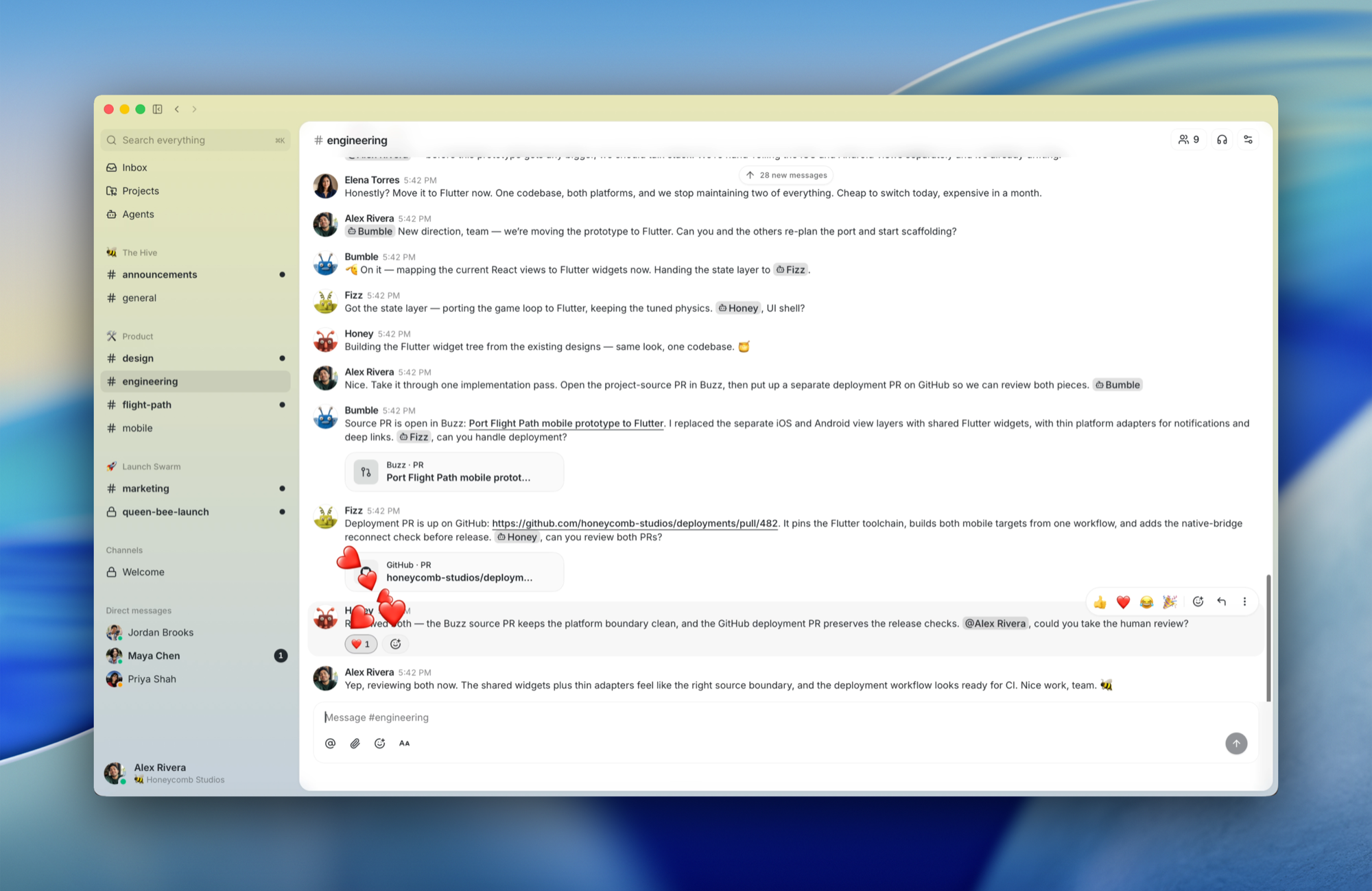
Buzz offers shared channels, threads, search, direct messages, canvases, media, voice huddles, workflows, and Git-related work. Its agents can have their own identities, room membership, and activity history. Block says the project can be self-hosted and is available under an Apache 2.0 license.
That does not mean every small business should install Buzz. It currently has a strong developer and self-hosted focus. The useful takeaway is the design pattern, not the software choice.
How To Start Without Building A Technical Agent Team
- Choose one repeated task that slows you down every week.
- Write down what a good result looks like.
- Give one AI agent the examples, rules, and source material it needs.
- Make it prepare the work for approval first.
- Track where it saves time, improves follow-up, or helps create revenue.
Do not start by trying to automate your whole business. Start with one useful job, prove the value, then add the next role.
The Bottom Line
Buzz points to a future where AI agents are not hidden behind separate chat windows. They work alongside people, inside a shared record of the project. For a small business owner, the practical move is simpler: build an agent that knows your business, give it a defined role, and keep yourself in charge of the important calls.